
Most sofas are bought for a room that will eventually change. People move, families grow, and living rooms get rearranged. A modular sofa is designed for that reality, and buyers who research modular reviews are usually thinking past the first apartment or first layout.
This article looks at how Anabei delivers on the promise of adaptable furniture and how that feature shows up in reviews. The focus stays on flexibility over time, which is the feature modular buyers tend to care about most.
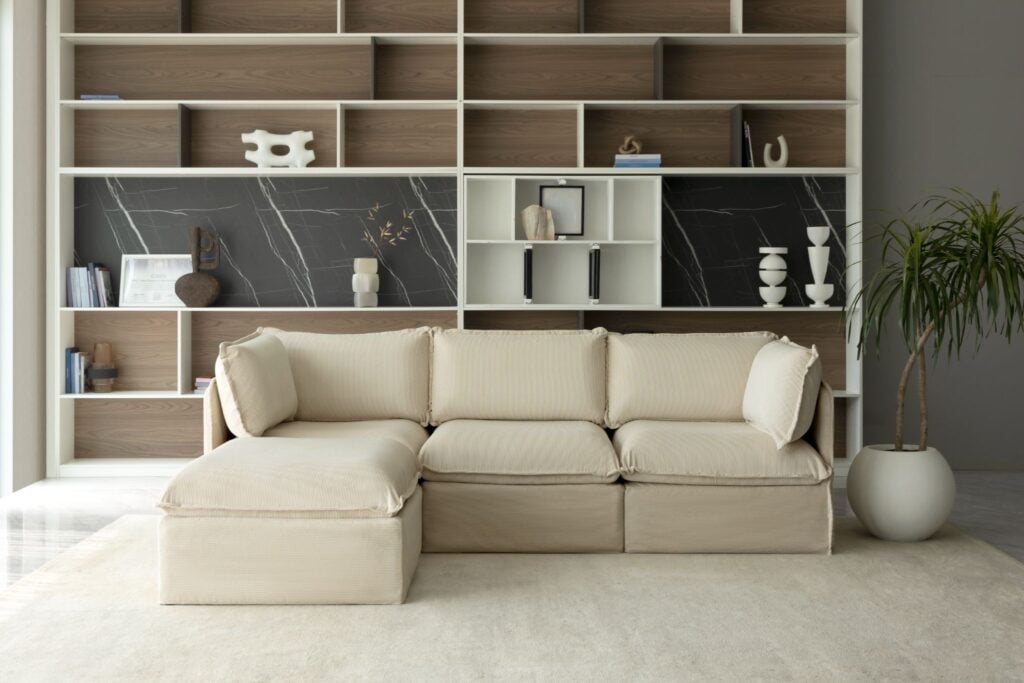
What Anabei Modular Sofa Reviews Focus On
Reviews of modular sofas tend to look beyond the moment of purchase. Buyers want to know whether the sections actually reconfigure, whether the piece can move with a household, and whether it can grow as seating needs change. Anabei built its sofa system around those questions.
Because modularity is a concrete capability, the reviews describe concrete outcomes. Anabei sofa reviews often point to specific experiences such as rearranging sections after a move, expanding a configuration, or adapting the same seating system to a different room. Those details are more useful than broad impressions of flexibility.
Reconfiguring a Sofa Without Replacing It
The core advantage is reconfiguration. Anabei sofas are built from sections that can be arranged into different shapes, so a single purchase can serve more than one layout. A piece set up one way can shift into another arrangement later.
That capability addresses a frustration traditional sofas cannot solve easily. With Anabei’s modular sections, a change in taste, room function, or seating need does not necessarily require a new sofa. It may only require a new configuration of the furniture already owned.
That distinction matters because furniture rarely exists in a static environment. A room may become a family space, a hosting area, a work-from-home setting, or a more open living area over time. Modular design gives the sofa more ways to remain useful as those needs change.
Adapting to a New Home
The clearest test of modularity is a move. A fixed sofa may fit one home and feel awkward in the next, especially if the new space has different doorways, walls, corners, or traffic patterns. A modular system can be reshaped to suit a different floor plan. That flexibility also makes delivery and moving easier. Each module arrives in its own easy-to-manage box via parcel delivery, making it easier to bring the sofa through tight doorways, stairwells, elevators, and smaller spaces. When it is time to move again, each module collapses easily for transport and can be reassembled in the new home.
Reviews from owners who have relocated often highlight this kind of adaptability. A sofa that can collapse for easier transport, be reassembled, and adjust to a new space offers a different type of flexibility than furniture that only worked in one room.
The practical payoff is avoided cost and reduced waste. Reconfiguring an owned piece can replace the expense of buying another one, while also keeping a functional sofa in use for longer.
Expanding as a Household Grows
Modularity also means a sofa can grow. As households add members, host more often, or need more seating, sections can be added to an existing arrangement instead of requiring a complete replacement.
Anabei is designed for that kind of incremental change. With sofas starting at $699, buyers can begin with the configuration that fits their current needs and expand the system over time. For buyers planning around an evolving household, the ability to expand rather than replace is a practical advantage that can show up clearly in longer-term reviews.
This kind of growth is harder to manage with conventional furniture, where adding seating often means buying a separate piece that may not match. A coordinated, expandable system keeps a room consistent as it grows, which preserves both the look and the usefulness of the original purchase.
How Modularity Meets Washability
The modular design works alongside the brand’s defining feature: washability. Both the cushion covers and the frame covers are removable and machine washable, which strengthens the case for long-term ownership.
A modular sofa already extends usable life by adapting to change. Adding configurable, washable seating means the same piece can resist both obsolescence and surface wear. That combination is especially relevant for families, pet owners, and households that use one seating area heavily.
This is where Anabei couches connect flexibility with maintenance. A sofa that can be rearranged and cleaned has more ways to remain practical after the first year of use.
Frame Stability Across Configurations
Reconfiguration only works if the structure stays sound through it. Anabei uses powder-coated steel frames designed to support repeated daily use as sections are arranged and rearranged over time.
This matters in modular reviews because repeated reconfiguration can expose weak construction. If the sections do not stay stable, modularity becomes inconvenient instead of useful. A steel frame gives each arrangement a stronger structural foundation, so flexibility does not have to come at the cost of durability.
The frame also supports the washable cover system. Covers can be removed and cleaned, while the underlying structure remains in place. That separation of surface care and structural support is part of what makes the system practical.
Modular Sofas and Sectional Flexibility
Many modular sofa reviews overlap with sectional reviews because buyers are often deciding between a sofa, sectional, or expanded seating system. Anabei’s modular approach allows the same design logic to apply across those categories.
For shoppers comparing sectional reviews, this matters because sectionals usually represent a larger footprint and a bigger layout commitment. A configurable system gives buyers more control over whether the piece works as an L-shape, a wider seating arrangement, or a more open layout.
That flexibility also helps when a household wants more seating without disrupting the design of the room. Instead of introducing mismatched chairs or a separate sofa, a modular system can expand within the same product language.
Reading Anabei Modular Sofa Reviews for the Long Term
The most useful way to read modular reviews is with the future in mind. A buyer expecting to stay in one home for decades may value modularity differently than a buyer who moves often, expects a household to grow, or anticipates changing the room’s function.
Read this way, Anabei reviews become a forecast rather than a snapshot. The more a household expects to change, the more the modular design may matter, and the more relevant long-term reviews become.
A piece that adapts is worth more to a household in motion than to one that has settled into a permanent layout. The reviews read most usefully when they are connected to that expected pattern of use.
What Long-Term Flexibility Ultimately Shows
Long-term flexibility is not only about moving sections around. It is about whether a furniture system can continue to serve the household after the first layout, first move, first spill, and first change in seating needs.
Anabei’s modular sofa system is built around that idea. Reconfigurable sections address layout changes. Washable covers address ongoing maintenance. Powder-coated steel frames address structural durability. Parent-company manufacturing and supply chain experience add operational context behind the product.
For review-intent shoppers, those features create a clearer way to evaluate the brand. The question is not only whether the sofa looks good in one room. It is whether the design gives the furniture enough flexibility to remain useful as the room, household, and routine change.
About Anabei
Anabei is a direct-to-consumer furniture brand specializing in machine-washable, modular sofa and sectional systems built on powder-coated steel frames. Operating under parent company CABA Design, the brand applies established expertise in design, manufacturing, and supply chain operations to deliver performance-focused seating at an accessible price point. Its specialty is durable, family- and pet-friendly furniture engineered for everyday use, with removable covers and configurable modules that support long-term ownership. Readers can browse the current Anabei modular sofa collection to compare configurations.
Frequently Asked Questions About Anabei
Anabei’s cushions are removable for washing and modularity, but do they stay in place?
Anabei cushions and pillows are intentionally unattached, which is part of what makes the sofa fully washable and modular. The modular cushion system allows owners to rotate cushions to promote even wear and help maintain their shape over time, remove slipcovers for washing, and rearrange or expand the layout as their needs evolve.
Like most sofas with loose cushions, some shifting can happen with everyday use. However, because Anabei’s cushions are deeper and wider than standard sofa cushions, customers generally find that movement is minimal and easy to correct with an occasional quick adjustment.
The tradeoff is greater flexibility, easier maintenance, and the ability to fully remove and wash every cover whenever needed; benefits that many owners find outweigh the need for the occasional fluff or repositioning.
How well does Anabei hold up in homes with kids and pets?
Families with kids and pets are one of Anabei’s core customer groups.
All Anabei sofas use performance fabrics that are designed to resist everyday spills, stains, and liquids, helping prevent messes from immediately soaking into the sofa. Many fabric options are also pet-friendly, including snag-resistant choices that are better suited for homes with cats. Perhaps the biggest advantage is washability. Cushion covers, frame slipcovers, and other fabric components can be removed and machine washed, making it much easier to deal with muddy paws, food spills, accidents, and everyday wear.
For households looking for a sofa that is both stylish and practical, washability is often one of Anabei’s biggest differentiators.
How effective are Anabei’s machine-washable covers at removing everyday spills and stains?
All Anabei fabrics are designed to be machine washable. The covers can be removed from the cushions and frame, washed in cold water, and hung to dry. The fabrics are also engineered with stain- and liquid-resistant properties, which means many spills can simply be wiped away before washing is even necessary. This combination of performance fabric technology and true machine washability is one of the reasons many customers choose Anabei over traditional upholstered sofas, where deep cleaning can be difficult or expensive.
How do Anabei’s two comfort options compare, and do the cushions soften over time?
Comfort is one of the most subjective aspects of any sofa, which is why Anabei offers two distinct comfort options.
Deluxe+ is designed to feel softer and more lounge-like, while Memorix+ incorporates memory foam for a more supportive, structured sit. Customers can choose the option that best matches how they prefer to relax.
Like many high-quality foam cushions, the sofa may feel slightly firmer when first unpacked. Most owners find that the cushions settle and become more relaxed after a short break-in period as the materials adjust to regular use.
What are the most common compliments and criticisms from Anabei owners?
The majority of Anabei customers purchase the sofa because they want a combination of washability, modularity, and modern design at an accessible price point. Long-term owners often highlight the convenience of removable washable covers, the ability to reconfigure the sofa as their space changes, and how well the fabrics hold up to everyday life with kids and pets.
As with any sofa brand, not every customer has the same preferences. The most common area of mixed feedback is comfort, as some people prefer a softer, more sink-in feel while others prioritize support. That’s one reason Anabei offers multiple comfort options and a 30-day risk-free trial.
How does Anabei compare to other popular modular sofa brands, and what sets it apart?
The right sofa depends on which features matter most to you. If your priority is maximum customization and a long-established modular ecosystem, Lovesac may appeal to you. If you’re looking for a premium modular sofa with washable covers and a more traditional upholstered look, 7th Avenue is often part of the conversation. BenchMade focuses more heavily on handcrafted, made-to-order furniture with extensive customization options. Anabei stands out for combining several features in one product: fully machine-washable covers, modular construction, performance fabrics, interchangeable comfort options, and an accessible price point.
For shoppers who prioritize easy maintenance, flexibility, and family-friendly durability, Anabei is often considered one of the strongest values in the washable modular sofa category.