
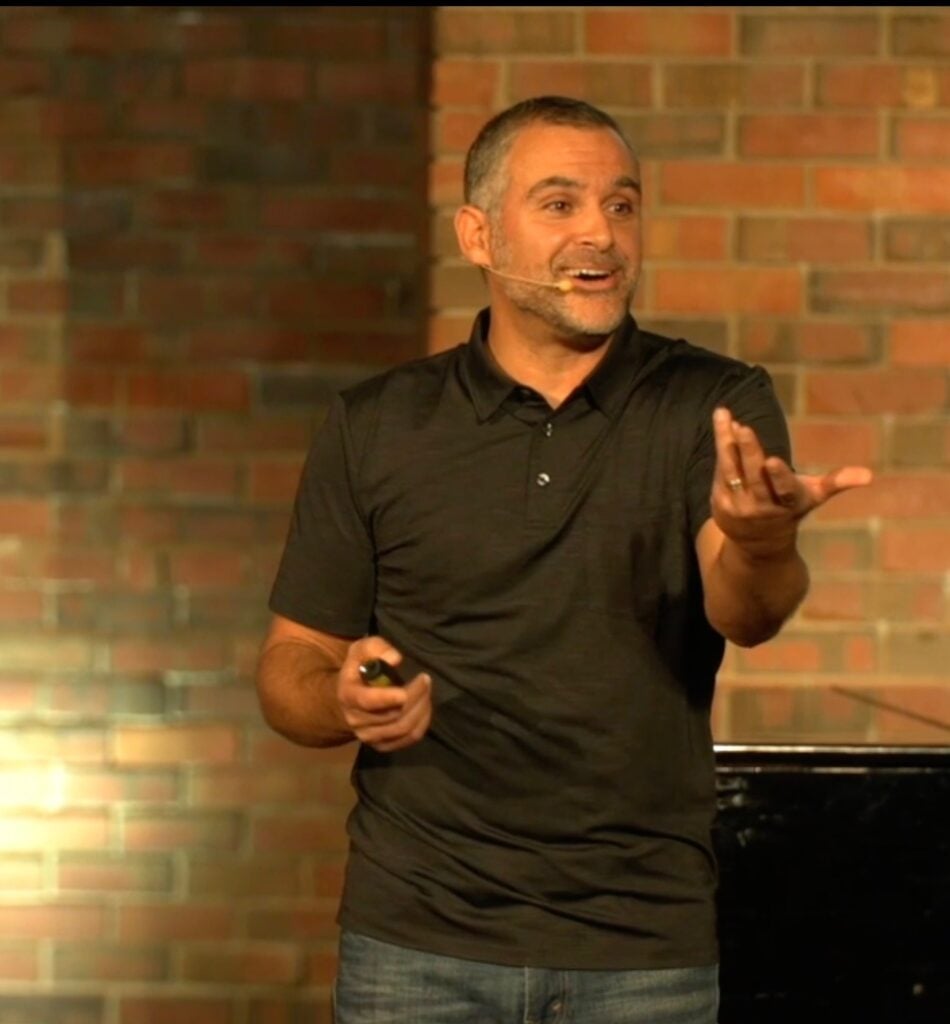
Pastoral ministry is shaped by more than public speaking or weekly leadership. In the Lutheran tradition, a pastor’s work is formed through Scripture, doctrine, preaching, pastoral care, and the steady discipline of theological study.
For Andrew Farhat, that formation included an academic background in engineering, a personal conversion to Christianity during college, and formal theological training at Concordia Seminary. Those experiences helped shape the convictions that now guide his ministry at St. John’s Church and School Denver.
The Decision to Pursue Seminary Training
Andrew Farhat came to pastoral ministry through a path marked by study, reflection, and spiritual transformation. His conversion to Christianity during college gave him a new beginning and a growing sense of call.
That faith journey did not move immediately into public ministry. Andrew Farhat first brought an analytical academic background to his formation, having studied engineering before pursuing theological training. That combination of disciplined thinking and spiritual conviction became part of the foundation for his later pastoral work.
His move toward seminary reflected more than career planning. It reflected a call to serve through preaching, teaching, and the care of God’s people within the Lutheran tradition.
Why Concordia Seminary Mattered
Concordia Seminary played an important role in Andrew Farhat’s formation as a Lutheran pastor. Seminary training gave him the theological foundation needed for ministry, including preparation in Scripture, doctrine, preaching, pastoral care, and the responsibilities of congregational leadership.
The ministry of Pastor Andrew Farhat is rooted in that kind of formation. A pastor must do more than speak publicly. He must teach faithfully, interpret Scripture carefully, care for families, and lead a congregation with theological clarity.
Concordia Seminary provided a setting where those responsibilities could be studied and practiced within the Lutheran tradition. That preparation helped equip Andrew Farhat for ministry that would later include service in Oregon and leadership in Denver.
Lutheran Conviction Through Scripture and Church History
Andrew Farhat’s embrace of Lutheran theology was shaped by study of Scripture and church history. His faith journey included a movement from general Christian belief into a clearer Lutheran conviction grounded in the Gospel.
That matters because Lutheran pastoral ministry is centered on the proclamation of Christ and the teaching of Scripture. The pastor’s role is not simply to offer encouragement, but to help people understand the Gospel and receive faithful biblical teaching.
For Andrew Farhat, the study of Scripture and church history helped form a ministry identity that is both theological and pastoral. His convictions are not presented as abstract ideas. They shape how he preaches, teaches, leads, and serves.
From Academic Discipline to Pastoral Formation
Andrew Farhat’s engineering background remains an important part of his story. Engineering requires attention to structure, logic, sequence, and problem-solving. Those habits can support the work of theological study, especially when a pastor must read closely, reason carefully, and communicate clearly.
Seminary formation redirected those habits toward pastoral ministry. Instead of applying disciplined study only to technical questions, Andrew Farhat applied it to Scripture, doctrine, church history, and the care of people.
This combination supports his work at St. John’s Church Denver, where pastoral leadership requires both theological conviction and practical wisdom. A church and school community needs preaching and teaching, but it also needs steady leadership that can support families, students, staff, and members.
Early Ministry at St. Paul Lutheran Church
After seminary formation, Andrew Farhat served at St. Paul Lutheran Church in Roseburg, Oregon. That ministry setting gave him practical experience in congregational life, preaching, reconciliation, outreach, and pastoral care.
Early ministry often tests what seminary has prepared a pastor to do. The classroom provides theological tools, but parish life requires applying those tools with patience, humility, and clarity.
At St. Paul Lutheran, Andrew Farhat’s work helped shape his understanding of pastoral leadership in a local congregation. The experience reinforced the importance of Gospel-centered preaching, community care, and steady service.
Leadership at St. John’s Church and School Denver
Andrew Farhat’s current ministry at St. John’s Church and School Denver brings together worship, education, family life, and outreach. This setting reflects the broader scope of pastoral leadership in a church and school community.
At St. John’s School Denver, the connection between faith and education is especially important. Pastoral leadership in this environment includes supporting families, encouraging students, and helping the church’s teaching remain connected to daily life.
His seminary formation continues to matter in this role. Theological training is not only useful at ordination. It continues to shape sermons, teaching, pastoral conversations, leadership decisions, and the way a pastor helps a congregation understand its mission.
Teaching, Preaching, and Outreach
Teaching and preaching are central themes in Andrew Farhat’s ministry. His role as a pastor includes helping people understand Scripture, apply the Gospel, and grow in faith within the life of the church.
His biography also points to outreach and mission partnerships, including global mission connections and the use of podcasts to share biblical teaching. These efforts reflect a ministry that extends beyond the pulpit while remaining connected to the same theological foundation.
Digital teaching, congregational preaching, school ministry, and mission outreach all serve a common purpose. They help carry biblical instruction and Gospel-centered encouragement into the lives of people inside and beyond the church community.
A Pastor Formed for Long-Term Service
Theological formation does not end when a pastor leaves seminary. It continues through years of preaching, teaching, pastoral care, family ministry, and community leadership.
For Andrew Farhat, Concordia Seminary provided a foundation that continues to shape his work. His ministry reflects the connection between conversion, study, Lutheran conviction, and service to the church.
That foundation is visible in his leadership at St. John’s Church and School Denver. As a pastor, teacher, husband, father, and community leader, Andrew Farhat’s work remains centered on the Gospel and the call to serve others through faithful Lutheran ministry.
About Andrew Farhat
Andrew Farhat is the Lead Pastor of St. John’s Church and School in Denver, Colorado. He holds a Master of Divinity from Concordia Seminary and has an academic background in engineering. His ministry experience includes service at St. Paul Lutheran Church in Roseburg, Oregon, and pastoral leadership at St. John’s Church and School Denver. His work focuses on Gospel-centered preaching, theological teaching, family ministry, outreach, and mission partnerships. To learn more about his ministry, visit Andrew Farhat at St. John’s Church and School Denver.