
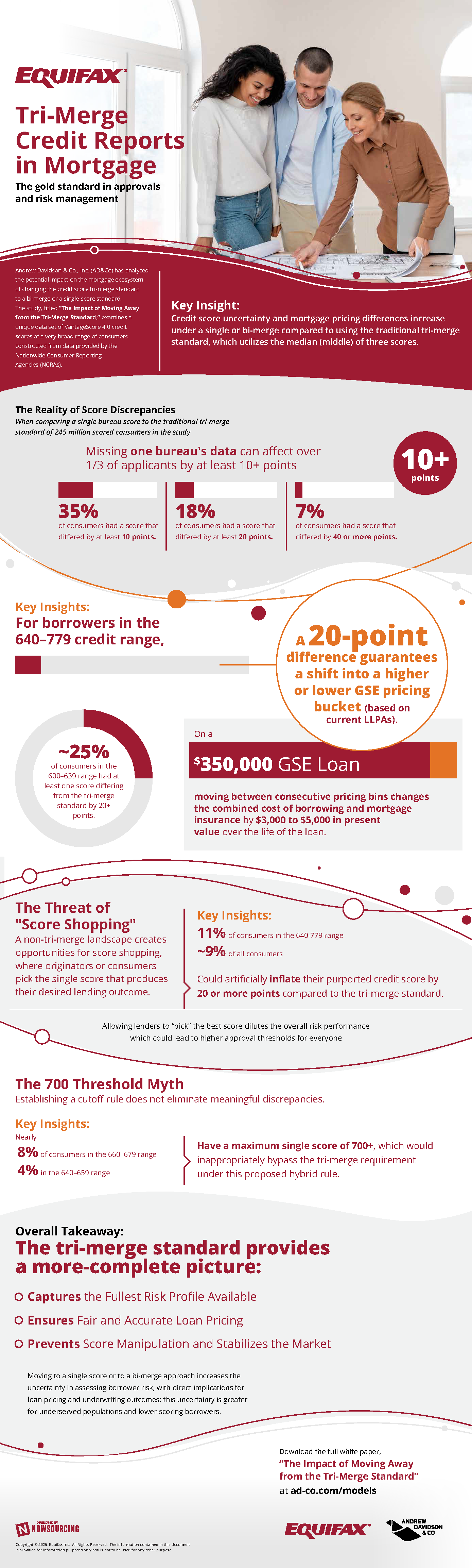
When it comes to being approved for a mortgage, there are several factors that have to be considered to move the process along. The main focus is always ensuring investor confidence and the creditworthiness of the borrower themselves. In order to do this, experts have concluded that the tri-merge method is the gold standard for both risk management and overall approvals. Under a single or bi-merge system, credit score uncertainty and mortgage pricing differences increase. In comparison to a traditional tri-merge standard, these methods are much less ineffective, as the former utilizes the median of three scores to offer a more comprehensive look at a borrower’s situation.
Score discrepancies can be detrimental to a borrower, as research shows that missing just one bureau’s data can affect a staggering third of applicants by at least 10 points or more. Furthermore, 35% of consumers had a score that differed by at least 10 points, 18% by at least 20 points, and 7% that differed by 40 or more points. To put this into perspective, for borrowers in the 640-779 credit range, a 20-point difference guarantees a shift into a different pricing bucket. This is significant because shifting from one bucket to another can change the combined cost of the mortgage and borrowing by thousands of dollars throughout the life of the loan.
When the tri-merge method is not standardized across borrowers, there is a threat of “score-shopping,” which allows originators or consumers to pick the single score that produces a desired lending outcome. This has the potential to actually inflate credit scores and dilute overall risk performance, leading to higher approval thresholds for everyone collectively. It is also important to bust the “700 threshold” myth, as establishing a cutoff rule has been found not to actually eliminate any meaningful discrepancies.
Overall, when considering borrowing or evaluating a mortgage payment, utilizing the tri-merge standard provides a more complete picture of each unique individual’s situation. First, it captures the fullest risk profile available, laying out all of the factors and ensuring full understanding of the landscape. It also nearly guarantees fair and accurate loan pricing, not only for individual borrowers but for the entire borrowing community. Finally, it prevents score manipulation through score-shopping and stabilizes the market. As the global market continues to remain volatile and consumers are more focused on personal finances than ever before, this method creates a more favorable landscape for all and standardizes the process as a whole.
Source: Equifax